Leeds United isn’t just a football club—it’s a legacy wrapped in white, passion, and relentless spirit. From glory days to gritty comebacks, their story is one of triumph, tragedy, and undying loyalty.
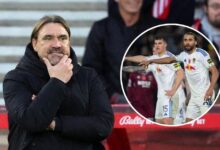
Leeds United: A Legacy Forged in White

Founded in 1919, Leeds United has grown from a modest Yorkshire club into one of England’s most iconic football institutions. Their journey reflects the soul of English football—full of drama, resilience, and unforgettable moments.
The Birth of a Football Giant
Leeds United was formed after the disbanding of Leeds City, a club expelled due to financial misconduct during World War I. The Football League granted the city a new franchise, and on October 17, 1919, Leeds United was officially born.
- The club joined the Football League’s Second Division in 1920.
- Early years were marked by inconsistency, with promotions and relegations defining their first few decades.
- Despite lackluster results, a loyal fanbase began to form, laying the foundation for future greatness.
“Leeds United is more than a team—it’s a heartbeat of the city.” – Fan chant, Elland Road
Don Revie’s Revolution
The turning point in Leeds United’s history came in 1961 with the appointment of Don Revie as manager. A former player, Revie transformed the club with discipline, tactical innovation, and a fierce work ethic.
- Revie introduced a structured, defensively solid approach combined with rapid counterattacks.
- He nurtured homegrown talent and built a team known for its unity and resilience.
- Under his leadership, Leeds rose from mid-table obscurity to become a dominant force in English football.
By the late 1960s, Leeds United was no longer just competitive—they were feared. Their rise culminated in winning the First Division title in 1969, marking the beginning of a golden era.
Golden Era: Triumphs and Controversies
The 1960s and 1970s were the most successful and controversial decades in Leeds United’s history. Under Don Revie, the club achieved unprecedented success—but not without criticism.
Domestic Dominance: First Division Glory
Leeds United won the English First Division (now Premier League) twice during their golden era: in 1968–69 and 1973–74. These titles cemented their status as one of England’s elite clubs.
- The 1968–69 title was won with a record 76 points (under the old two-point system).
- Key players included Billy Bremner, Johnny Giles, Jack Charlton, and Norman Hunter.
- Their style was efficient, physical, and often labeled as ‘ruthless’ by critics.
Despite the accolades, Leeds United’s aggressive style earned them a controversial reputation. While fans admired their grit, pundits often accused them of being overly physical.
European Battles and Near Misses
Leeds United made deep runs in European competitions, reaching the European Cup final in 1975. That match, against Bayern Munich, remains one of the most debated in football history.
- The final, held in Paris, ended 2–0 to Bayern, but Leeds players and fans claimed unfair officiating.
- Several Leeds players were sent off or injured under questionable circumstances.
- UEFA later awarded Leeds a ‘fair play’ trophy in 2000, acknowledging the controversy.
They also won the Inter-Cities Fairs Cup twice (1968, 1971), a precursor to the UEFA Cup, showcasing their continental prowess.
The Revie Exit and Decline
In 1974, Don Revie left Leeds United to become England’s national team manager. His departure marked the beginning of a slow decline.
- Revie’s successor, Brian Clough, lasted only 44 days—a legendary failure due to clashes with players and staff.
- Without Revie’s leadership, the team struggled to maintain cohesion.
- By the late 1970s, Leeds had fallen from title contenders to mid-table mediocrity.
The golden era ended not with a bang, but with a gradual fade—leaving fans nostalgic for the days of dominance.
Leeds United in the Premier League Era
The formation of the Premier League in 1992 brought new challenges and opportunities. Leeds United experienced a brief resurgence in the 1990s before a dramatic fall.
The 1990s Revival Under Howard Wilkinson
After years of inconsistency, Leeds found success again in 1992 when they won the last edition of the old First Division under Howard Wilkinson.
- Key players included Gordon Strachan, Gary McAllister, and Lee Chapman.
- The title win was built on solid defense and clinical finishing.
- It marked Leeds United’s third English league title and their first in 18 years.
This victory qualified them for the inaugural UEFA Champions League, reigniting hopes of European glory.
Financial Mismanagement and the Great Fall
Despite early Champions League success—reaching the semi-finals in 2001—Leeds United’s board made disastrous financial decisions.
- The club spent heavily on transfers, banking on sustained Champions League revenue.
- When they failed to qualify consistently, debts mounted rapidly.
- Star players like Rio Ferdinand, Alan Smith, and Robbie Keane were sold to cover liabilities.
By 2004, Leeds United was relegated to the Championship, and just two years later, they dropped to League One—the third tier of English football—for the first time in their history.
Rebuilding from the Ashes
The descent to League One was a wake-up call. A new ownership group, led by Ken Bates, began the long process of stabilization.
- Smart management and youth development became priorities.
- Coaches like Simon Grayson helped guide the club back to the Championship by 2010.
- Though promotion to the Premier League remained elusive, the foundation was being rebuilt.
This period tested the loyalty of Leeds fans like never before. Yet, Elland Road remained full, a testament to the club’s enduring spirit.
Marcelo Bielsa and the Modern Resurgence
The appointment of Marcelo Bielsa in 2018 marked a turning point in Leeds United’s modern history. The Argentine manager brought a revolutionary style and renewed belief.
Bielsa’s Philosophy: Football as Art
Known as “El Loco,” Bielsa transformed Leeds United with his high-intensity, attacking football.
- His system emphasized pressing, vertical passing, and relentless energy.
- Players like Kalvin Phillips, Patrick Bamford, and Raphinha thrived under his guidance.
- Training sessions became legendary for their intensity and detail.
Bielsa didn’t just change how Leeds played—he changed how fans saw the game. Football became a spectacle of passion and precision.
Promotion Back to the Premier League
After 16 years in the lower divisions, Leeds United secured promotion to the Premier League in 2020 by winning the Championship.
- They finished as champions, seven points clear of second place.
- Their attacking style earned them 93 points and widespread acclaim.
- Fans celebrated at Elland Road, many in tears, as the long exile ended.
The promotion was more than a sporting achievement—it was an emotional catharsis for a club and its supporters.
Challenges in the Top Flight
Returning to the Premier League brought new pressures. While Bielsa’s Leeds impressed with their bravery, survival was hard-fought.
- In their first season back (2020–21), they finished 9th—an impressive feat.
- However, defensive vulnerabilities and fixture congestion led to a 17th-place finish in 2021–22, narrowly avoiding relegation.
- Despite fan support, Bielsa was sacked in February 2022 after a winless streak.
The post-Bielsa era has been turbulent, with managerial changes and inconsistent performances, but the dream of Premier League stability remains alive.
Elland Road: The Heartbeat of Leeds United
Elland Road isn’t just a stadium—it’s a fortress, a symbol, and a home. Located in the Beeston area of Leeds, it has hosted over a century of football history.
History and Architecture
Opened in 1897, Elland Road was initially used by Leeds City before being adopted by Leeds United.
- The stadium has undergone multiple renovations, with a current capacity of around 37,792.
- Its four stands—the West, East, South, and North (also known as the Kop)—each have unique atmospheres.
- The South Stand, in particular, is known for its vocal support and standing section.
Elland Road has hosted international matches, cup finals, and even concerts, but its true identity remains tied to Leeds United.
The Atmosphere on Matchday
There are few places in football louder or more passionate than Elland Road on a matchday.
- Fans sing from kickoff to final whistle, creating an intimidating environment for visitors.
- Chants like “We Are Leeds!” and “Marching On Together” echo across the city.
- The stadium’s proximity to the pitch amplifies the noise and emotion.
“When Elland Road roars, you feel it in your bones. That’s when Leeds are at their strongest.” – Former player Lucas Radebe
Future Development Plans
Current owners Aser Group have proposed expanding Elland Road to increase capacity and modernize facilities.
- Plans include a new South Stand and improved hospitality areas.
- The goal is to make Elland Road a 21st-century stadium without losing its soul.
- Community engagement remains central to any redevelopment discussions.
Preserving the stadium’s heritage while embracing progress is a delicate balance—but one the club is committed to.
Iconic Players Who Wore the White Shirt
Leeds United’s history is defined by legendary players whose names are etched in club folklore.
Billy Bremner: The Heart and Soul
Captain during the Revie era, Billy Bremner was the embodiment of Leeds United’s fighting spirit.
- Played over 770 games for the club between 1959 and 1976.
- Known for his leadership, tenacity, and passing ability.
- Despite his small stature, he dominated midfield through sheer willpower.
Bremner remains a symbol of loyalty and passion, and a statue of him stands outside Elland Road.
Lucas Radebe: The Chief
Acquired as part of a deal for Phil Masinga, Radebe became a fan favorite and club legend.
- Played 262 games for Leeds between 1994 and 2005.
- His leadership and defensive prowess earned him the nickname “The Chief.”
- Nelson Mandela once said Radebe was more famous than he was in South Africa.
Radebe’s legacy extends beyond football—he’s a humanitarian and ambassador for the club.
Eric Cantona: The Fledgling Star
Before his Manchester United fame, Eric Cantona was a rising star at Leeds United.
- Played a key role in the 1991–92 title win with his flair and creativity.
- His unpredictable nature sometimes clashed with management.
- Sold to Manchester United in 1992, where he became a global icon.
Though his Leeds stint was short, Cantona’s impact was significant, symbolizing a shift toward attacking football.
Rivalries That Fuel the Fire
Rivalries define football culture, and Leeds United has several intense ones that shape its identity.
Manchester United: The North vs. North Divide
The rivalry with Manchester United is less about geography and more about history and contrast.
- Leeds sees itself as the working-class, gritty counterpart to United’s global brand.
- Matches are charged with emotion, especially when Leeds is in the Premier League.
- The signing of Eric Cantona intensified the animosity.
While not a traditional derby, the fixture carries deep symbolic weight.
Derby County: The Original Foe
One of the fiercest rivalries in English football, the Leeds vs. Derby clash dates back to the 1970s.
- Don Revie and Brian Clough’s personal feud fueled the fire.
- Clough’s infamous 44-day tenure at Leeds poisoned relations.
- Matches often turned violent, leading to police intervention in the 1980s and 1990s.
Though less intense today, the rivalry remains emotionally charged for older fans.
Yorkshire Derbies: Sheffield United and Huddersfield
Within Yorkshire, Leeds faces regional rivals Sheffield United and Huddersfield Town.
- Sheffield United matches are competitive, especially when both teams are in the same division.
- Huddersfield, once a dominant force, now plays in lower leagues, but local pride keeps the rivalry alive.
- These games are about regional supremacy and bragging rights.
While not as heated as other rivalries, they add depth to Leeds United’s competitive landscape.
Leeds United’s Future: Ambition and Challenges
As Leeds United navigates the modern football era, ambition clashes with financial reality.
Ownership and Financial Strategy
Since 2017, Leeds has been owned by Aser Group, led by Andrea Radrizzani.
- The ownership has invested in infrastructure, analytics, and youth development.
- However, Financial Fair Play (FFP) regulations have limited spending.
- The club aims for sustainable growth, not short-term gambles.
Balancing ambition with fiscal responsibility remains a key challenge.
Youth Development and Recruitment
Leeds United has revitalized its academy, producing talents like Kalvin Phillips and Sam Greenwood.
- The Thorp Arch training facility is among the best in England.
- Data-driven recruitment has become central to player acquisition.
- The club focuses on young, high-potential players who can be developed and sold at a profit.
This model, inspired by clubs like Ajax and RB Leipzig, aims for long-term stability.
Staying in the Premier League
Survival in the Premier League is the immediate goal. Relegation would be a financial and emotional blow.
- Strong recruitment and managerial stability are crucial.
- Fans demand competitive performances, even if survival is the primary target.
- The club must avoid the financial spiral that led to their 2004 collapse.
With smart leadership, Leeds United can not only survive but thrive in the top flight.
What is Leeds United’s most successful era?
The most successful era for Leeds United was under manager Don Revie in the 1960s and 1970s. During this time, the club won two First Division titles (1968–69, 1973–74), one FA Cup (1972), one League Cup (1968), and two Inter-Cities Fairs Cups. They also reached the European Cup final in 1975.
Why was Marcelo Bielsa so important to Leeds United?
Marcelo Bielsa revitalized Leeds United with his high-pressing, attacking philosophy. He led the club to promotion to the Premier League in 2020 after a 16-year absence, restoring pride and excitement. His influence extended beyond tactics—he reconnected the team with its fans and redefined the club’s identity.
Who are Leeds United’s biggest rivals?
Leeds United’s biggest rivals include Manchester United, Derby County, and Sheffield United. The rivalry with Derby is historically the most intense, rooted in the Revie-Clough feud. Matches against Manchester United carry symbolic weight, while Sheffield United contests are key Yorkshire derbies.
Has Leeds United ever won the Premier League?
No, Leeds United has never won the Premier League. Their last league title came in 1991–92, which was the final season of the old First Division, before the Premier League era began in 1992–93.
Where do Leeds United play their home games?
Leeds United play their home games at Elland Road, located in the Beeston area of Leeds, West Yorkshire. The stadium has a capacity of approximately 37,792 and has been their home since 1919.
Leeds United’s story is one of resilience, passion, and unwavering belief. From the glory days of Don Revie to the emotional return under Marcelo Bielsa, the club has weathered triumph and tragedy. Its fans, stadium, and legacy ensure that Leeds United will always be more than just a football team—it’s a symbol of Yorkshire pride and footballing heart. As they navigate the challenges of the modern game, one thing remains certain: as long as Elland Road stands, Leeds United will march on together.
Further Reading:
